
10-Year-Old Pakistan Boy Won an International Quran Recitation Title. When news broke from Jakarta that a young boy from Karachi had been crowned the top winner in an international Quran recitation competition, many people first felt disbelief, followed by admiration. The story of Muhammad Abu Bakr, a 10-year-old blind student of Madrassa Dar Al-Islah Lil Tahfeez Wal Tajweed, spread across social platforms, news channels, and community circles — not only because he won first place, but because he did so by overcoming challenges most adults find unimaginable. His victory, achieved in the “Tahfeez and Qira’at” program under Rabita Alam Islami, has now become a symbol of hope, dedication, and unshakable faith.
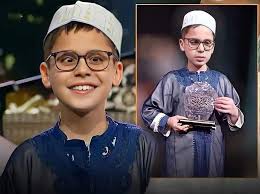
Table of Contents
Abu Bakr travelled to Indonesia alongside competitors from various Islamic countries, many of whom had spent years training under celebrated qaris. Despite being far from home and surrounded by unfamiliar faces, the young contestant remained composed, spending time reviewing his memorized passages and preparing mentally for the moment he would stand before the judges. Unlike many contestants who rely on visual cues or written notes during practice, Abu Bakr had spent every moment of preparation relying solely on memory, sound, and repetition — skills sharpened due to his blindness.10-Year-Old Pakistan Boy Won an International Quran Recitation Title.
A Childhood Shaped by Faith and Patience
Born and raised in a modest neighborhood of Karachi, Abu Bakr’s life has been shaped by perseverance from the very start. His father, who works as a caretaker in a local mosque, often speaks about the struggles the family faced, but also about how each challenge strengthened their commitment to their son’s education. Despite limited financial means, they enrolled him in a madrassa known for its strict Tajweed and memorization standards.
Teachers at Dar Al-Islah Lil Tahfeez Wal Tajweed recall that even as a very young child, Abu Bakr showed remarkable listening skills. While other children needed repeated visual demonstrations, he relied entirely on sound. His teacher, Qari Islahullah Sadiq, says he noticed a rare spark in the boy: a calm presence, an unusual grasp of rhythm, and an exceptional memory. These qualities later became the foundation of his international achievement.10-Year-Old Pakistan Boy Won an International Quran Recitation Title.
10-Year-Old Pakistan Boy Won an International Quran Recitation Title! The Jakarta Competition: A Global Stage
The competition in Jakarta gathered young huffaz and qaris from many countries, each hoping to earn recognition for their training and dedication. Before the formal recitation rounds began, contestants underwent orientation sessions, voice tests, and recitation rehearsals. Judges, consisting of celebrated qaris from the Middle East and Southeast Asia, evaluated each participant on pronunciation, fluency, emotion, and adherence to Tajweed rules.
When Abu Bakr’s turn arrived, there was an unexpected silence in the hall. Many audience members, unaware of his blindness, simply waited in anticipation. But once he began reciting, the atmosphere shifted. His voice carried a clarity and emotional depth uncommon even among skilled adult reciters. Listeners later described his recitation as “flowing like water,” “filled with emotion,” and “a reminder of divine beauty.”
His impeccable command of Tajweed left judges visibly impressed. Several attendees recalled that after he finished, the entire hall erupted in applause—something unusual for competitions where audiences typically maintain silence out of respect.
Pride and Honor for Pakistan
When results were announced and Abu Bakr’s name was declared the winner, messages of congratulations began pouring in from teachers, religious scholars, and citizens across Pakistan. His father expressed that he could hardly speak when he received the phone call from Jakarta informing him of the result. For a man whose life revolves around serving the mosque, his son’s achievement felt like a deeply personal blessing.
Teacher Qari Islahullah Sadiq became emotional when describing the moment he learned of his student’s victory. He emphasized that Abu Bakr’s journey was not fueled by privilege but by sheer hard work, long nights of practice, and constant revision. According to him, Abu Bakr’s achievement should remind people that greatness often emerges from places least expected.10-Year-Old Pakistan Boy Won an International Quran Recitation Title.
An Inspiration for Children with Disabilities
What makes Abu Bakr’s accomplishment truly remarkable is not just his technical skill but the message it carries for thousands of children with visual impairments or disabilities. Too often, such children are underestimated or denied opportunities. Abu Bakr’s story challenges these assumptions, proving that disability is not a barrier to excellence when met with dedication and proper guidance.
Organizations that work with visually impaired children have already begun citing his achievement as a motivational case study. Several schools have expressed a desire to invite him for visits so students can hear his story firsthand.
A National Moment of Reflection
Abu Bakr’s triumph is more than a personal victory; it is a reminder of what can be achieved through community support, faith-based education, and perseverance. His success highlights the importance of nurturing young talent, particularly in fields like Quranic recitation where skill, spirituality, and discipline blend together.
His journey also encourages families and educational institutions in Pakistan to invest more deeply in inclusive learning. Blind children and those with other disabilities often have extraordinary capabilities that remain hidden due to lack of exposure. Abu Bakr’s story shines a light on this reality, urging society to reassess how it supports children with unique learning needs.
Who is Muhammad Abu Bakr?
Muhammad Abu Bakr is a 10-year-old blind student from Karachi, Pakistan, who gained international recognition after winning first place in the Rabita Alam Islami’s “Tahfeez and Qira’at” Quran recitation competition held in Jakarta, Indonesia.
What is the “Tahfeez and Qira’at” program?
It is an international Quran memorization and recitation competition organized under Rabita Alam Islami, aimed at showcasing talented young qaris from around the world.
Conclusion
From the alleys of Karachi to the grand stage of Jakarta, Abu Bakr’s story is a powerful reminder that greatness knows no physical boundaries. His flawless recitation, unshakable determination, and quiet strength have turned him into a symbol of hope for millions of Pakistanis. As he returns home with a first-place trophy and the admiration of the world, his message remains clear: with faith, hard work, and support, even the most difficult challenges can be overcome.